Table of Contents
Your smile is one of the first things people notice. It can light up a room, convey confidence, and make a lasting impression.
But what if you’re not entirely happy with your smile? Maybe your teeth are chipped, discoloured, or unevenly spaced. Fortunately, modern dentistry offers a permanent solution: dental veneers.
We’ll take you to the world of dental veneers and guide you through its impact on transforming your smile.
Dental Veneers
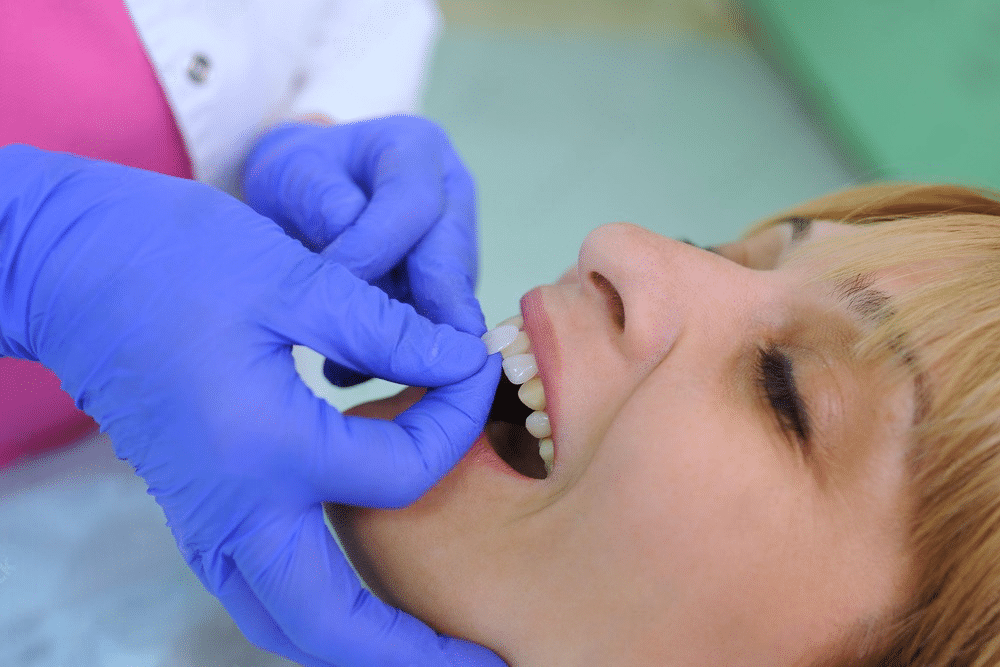
Dental veneers are thin shells that are custom-made to bond to the front surface of your teeth. These dental overlays resemble your natural teeth but with enhanced aesthetics. They are applied by only removing 0.3 – 0.5 millimetres from the surface of the tooth, preserving tooth nerve and maintaining its strength. This ensures minimal to no issues for potential future replacements.
The primary objective of dental veneers is to transform the shape, colour, size, and appearance of your natural teeth. Veneers can address a wide range of cosmetic dental concerns, including chips, cracks, discolouration, crooked teeth, and gaps, ensuring a dazzling, natural-looking smile you’ll love to show off.
Types of Dental Veneers
When considering dental veneers, there are several options available to suit your needs, desired appearance, other factors.
Porcelain veneers
- Porcelain veneers stand out as the top choice for individuals seeking a flawless smile with exceptional stain resistance, closely resembling the natural shine of healthy teeth.
- Porcelain veneers boast high biocompatibility, minimising the risk of damage to gum tissue and surrounding soft tissues in the mouth.
- The highlighting factor of porcelain veneers lies in their remarkable ability to enhance the aesthetic appeal due to their lifelike appearance and texture.
Composite Veneers
- Composite veneers are made from composite resin, comprising a blend of organic and inorganic materials such as the initiator, resin, and coupling agent. The main inorganic component found in composite resin is filler.
- Like tooth-coloured dental fillings, composite resin veneers possess comparable properties. While they are robust, they are not as long-lasting.
- These veneers are manufactured and applied directly in the dental clinic by the dentist. This means they typically require just one appointment to complete the dental procedure.
Lumineers
- Lumineers are a type of porcelain veneer made from ultra-thin porcelain laminate, thinner than standard veneers.
- As a result, this type of veneers requires minimal preparation before placement, making them suitable for patients who cannot undergo tooth reduction.
- Lumineers boast a smooth texture and are utilised to address various dental concerns, including discolouration, irregular tooth shapes, or gaps.
Removable Veneers
- Removable veneers, commonly referred to as snap-on smiles or snap-on veneers, offer a temporary solution for those hesitant about committing to permanent traditional veneers.
- Unlike full crowns or dentures, removable veneers are a layer of teeth cosmetic that can be easily inserted over broken or imperfect teeth.
- There are two main types available:
- Instant veneers: Achieved by immersing them in hot water and pressing them to your teeth with its soft-fitting material.
- Custom-made clip-on veneers: The dentist will first take an impression of your teeth, which will be sent to a dental lab. Skilled technicians then craft a personalised set of veneers tailored to your specifications, which you’ll receive in the mail.
Here’s a breakdown of the veneer options, highlighting their key advantages and disadvantages, to help you make the right choice.
| Veneer Type | Advantages | Disadvantages |
| Porcelain | – Natural appearance – Long-lasting durability – Excellent stain resistance | – Irreversible procedure (includes enamel removal) – Higher cost compared to other options – May cause temporary tooth sensitivity |
| Composite | – More affordable than porcelain – Less invasive procedure (minimal enamel removal) – Can sometimes be completed in one visit | – Lower durability compared to porcelain – More prone to chipping and staining – Requires frequent replacement or repair |
| Lumineers | – Reversible procedure (no enamel removal) – Requires less tooth preparation – Slightly less expensive than porcelain | – May feel bulky due to added structure – Shorter lifespan than porcelain veneers – Less natural-looking compared to other options |
| Removable | – Removable for flexibility and cleaning – Less invasive procedure with easy application – Affordable option for temporary smile enhancement | – Prone to plaque buildup and potential tooth decay – Thicker material may cause discomfort – Not a long-term solution for various dental issues – No stain resistance |
Dental Veneers Before and After
Now that we’ve grasped the fundamentals of dental veneers, the next logical question arises: How exactly can dental veneers transform my smile? To answer this, let’s delve into the transformative power of dental veneers and explore the dramatic impact they can have, as evidenced by dental veneers before and after comparisons.
Fixing Discoloured Teeth
Over time, teeth can become stained or discoloured from coffee, tea, red wine, or simply aging. Traditional teeth whitening might not always achieve the desired results, especially for stubborn stains or deep discolouration. This is where dental veneers shine.
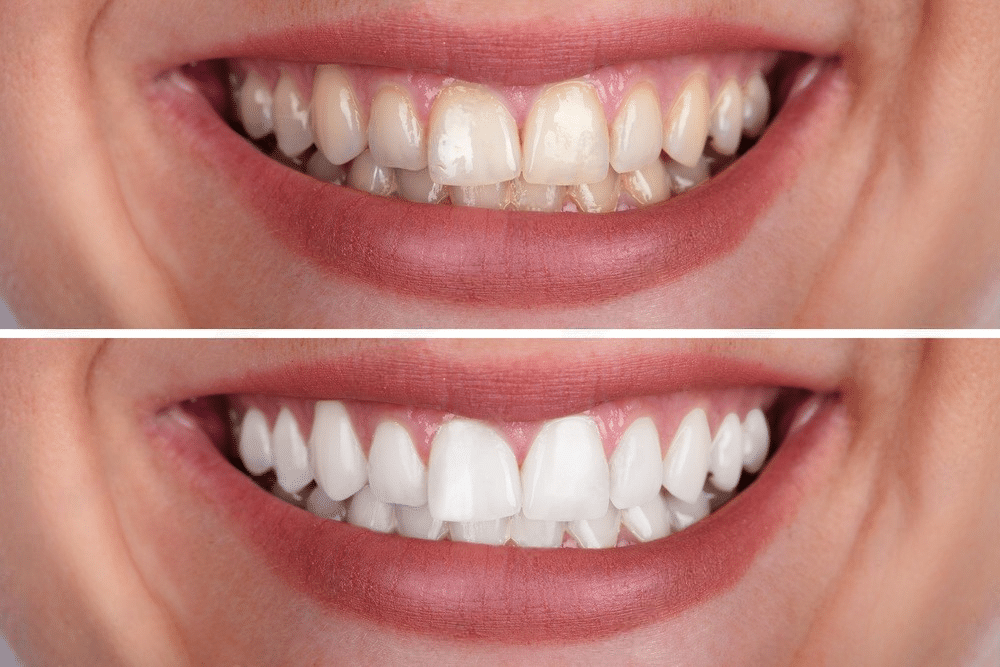
By fixing discoloured teeth, the transformative effect of dental veneers before and after is more than just your smile; they can revolutionise your confidence and self-image. Imagine a “before” photo where you’re hiding your smile because your teeth appear dull or yellowed. The “after” picture reveals a radiant smile with teeth boasting a uniform, bright white shade thanks to perfectly matched veneers. No more hiding your smile – you’ll be beaming with newfound confidence!
Closing Gaps and Correcting Misalignments
Small gaps or uneven spacing between teeth can be aesthetically unpleasing. Veneers can be used to close these gaps and create a more uniform smile. Additionally, if you have slightly misaligned teeth but braces aren’t your preferred option, veneers can provide a subtle correction for a straighter, more balanced appearance.
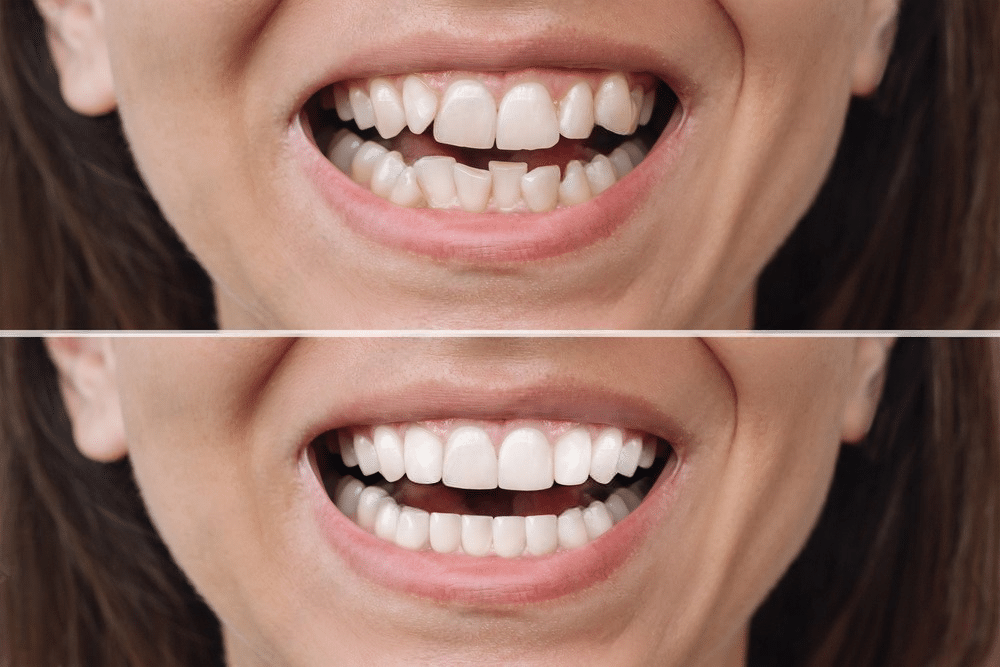
Witness the astonishing results of dental veneers before and after, as they effortlessly erase gaps and align teeth for a picture-perfect smile. A “before” picture might show a smile with noticeable gaps between the front teeth. The “after” picture highlights a beautifully aligned smile with the gaps completely vanished, thanks to strategically placed veneers.
Restoring Chipped or Broken Teeth
Minor chips or cracks in your teeth can happen due to accidents, biting down on hard objects, or even just wear and tear. These imperfections can make your smile look uneven and affect your confidence.
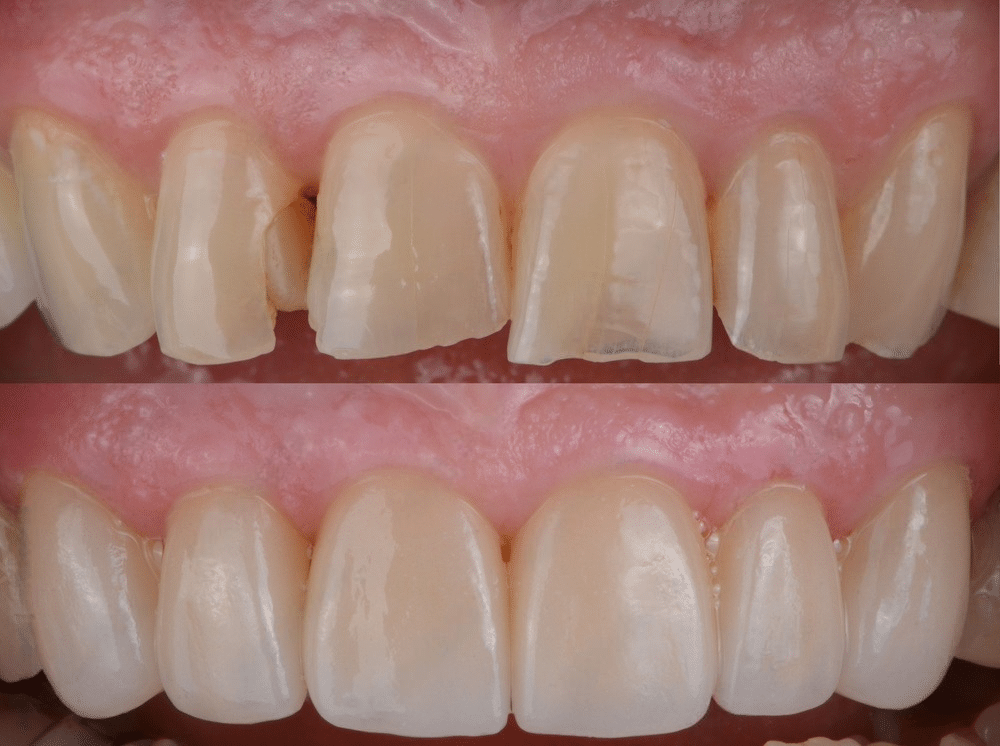
Dental veneers before and after pictures of chipped or broken teeth are truly remarkable. The “before” picture might reveal a chipped tooth detracting from your overall smile. The “after” picture displays a flawless, repaired tooth seamlessly integrated with the rest of your smile, thanks to a custom-made veneer.
Creating a Complete Smile Makeover
Dental veneers aren’t just for fixing a chipped tooth or masking minor imperfections. They can be used to create a complete smile makeover, addressing multiple cosmetic concerns at once. Imagine a dental veneers before and after scenario:
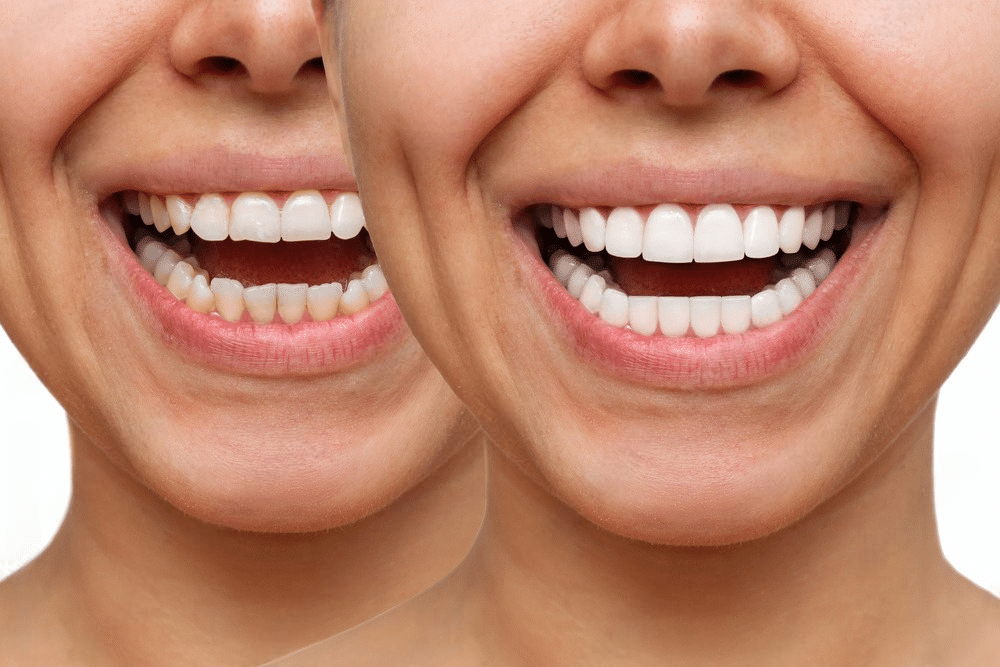
- The Before: Your smile is marred by discolouration from years of coffee or tea. A chipped tooth from a childhood mishap disrupts the smooth flow of your smile line. Minor gaps between teeth create a sense of unevenness.
- The After: Thanks to strategically placed veneers, your smile undergoes a breathtaking transformation. The veneers are custom coloured to achieve a dazzling white shade that complements your natural complexion. The chipped tooth is masked seamlessly, creating a uniform and aesthetically pleasing appearance. The gaps are filled, leaving you with a perfectly aligned smile that radiates confidence.
However, the benefits of dental veneers extend beyond aesthetics. Here’s how they can add value to your life:
- Enhanced Confidence: A beautiful smile can boost your confidence in social and professional settings.
- Improved Oral Health: Veneers can protect weakened tooth structure from further damage, promoting better oral health.
- Durability and Stain Resistance: Porcelain veneers, a popular choice, are exceptionally durable and resist staining, ensuring a long-lasting smile.
- Natural Appearance: Advanced techniques allow dentists to create veneers that mimic the natural light reflection of teeth for a realistic look.
Considering Dental Veneers? Here’s What to Know
If you’re interested in learning more about dental veneers and whether they’re right for you, here are some key points to consider:
- Consultation: The first step involves scheduling a consultation with a qualified cosmetic dentist. This expert will meticulously examine your teeth, discuss your specific cosmetic concerns, and assess your overall oral health. Together, you’ll explore whether veneers are the right choice for you. The dentist will also address any questions or anxieties you may have, ensuring you feel confident and well-informed throughout the process.
- Material Selection: In collaboration with your dentist, you’ll select the veneer material. As you’re aware, dental veneers come in two primary materials: porcelain and composite resin. Each has its own advantages and disadvantages. Based on your needs, budget, and desired aesthetic outcome, select the one that best aligns with your requirements.
- Preparation: To ensure a seamless fit for the veneers, a small amount of enamel will be removed from the front surface of your teeth. This is typically a painless procedure performed under local anaesthesia, minimising any discomfort.
- Placement: Once your permanent veneers are ready, your dentist will carefully bond them to your teeth. This involves meticulous attention to detail, ensuring a natural and comfortable fit that complements your facial features and overall smile.
- Veneer Care: Dental veneers are remarkably durable, but just like natural teeth, they require proper oral hygiene practices. By brushing twice daily, flossing regularly, and scheduling regular dental checkups, you can ensure your veneers last for many years, allowing you to enjoy your radiant smile confidently.
A Shining Investment in Your Smile
Dental veneers are an investment in your smile and your overall well-being. The confidence and happiness they can bring are truly priceless. So, if you’ve been dreaming of a stunning smile makeover, dental veneers before and after pictures can be a great source of inspiration. Make sure to thoroughly research your options and seek advice from your dentist before making any decisions.
Get Your Dental Veneers Before and After Transformation Now!
Located conveniently in Melbourne, Parkmore Family Dental is a trusted provider of cosmetic dentistry services. We understand that every smile is unique. That’s why we offer a comprehensive consultation process where our experienced cosmetic dentists work closely with you to analyse your dental situation and offer the best solution.
We pride ourselves on delivering quick, hassle-free, and painless procedures, ensuring your journey towards a radiant smile is as comfortable as it is transformative. Contact Us today to schedule your consultation, and remember, a dazzling smile is just an appointment away!