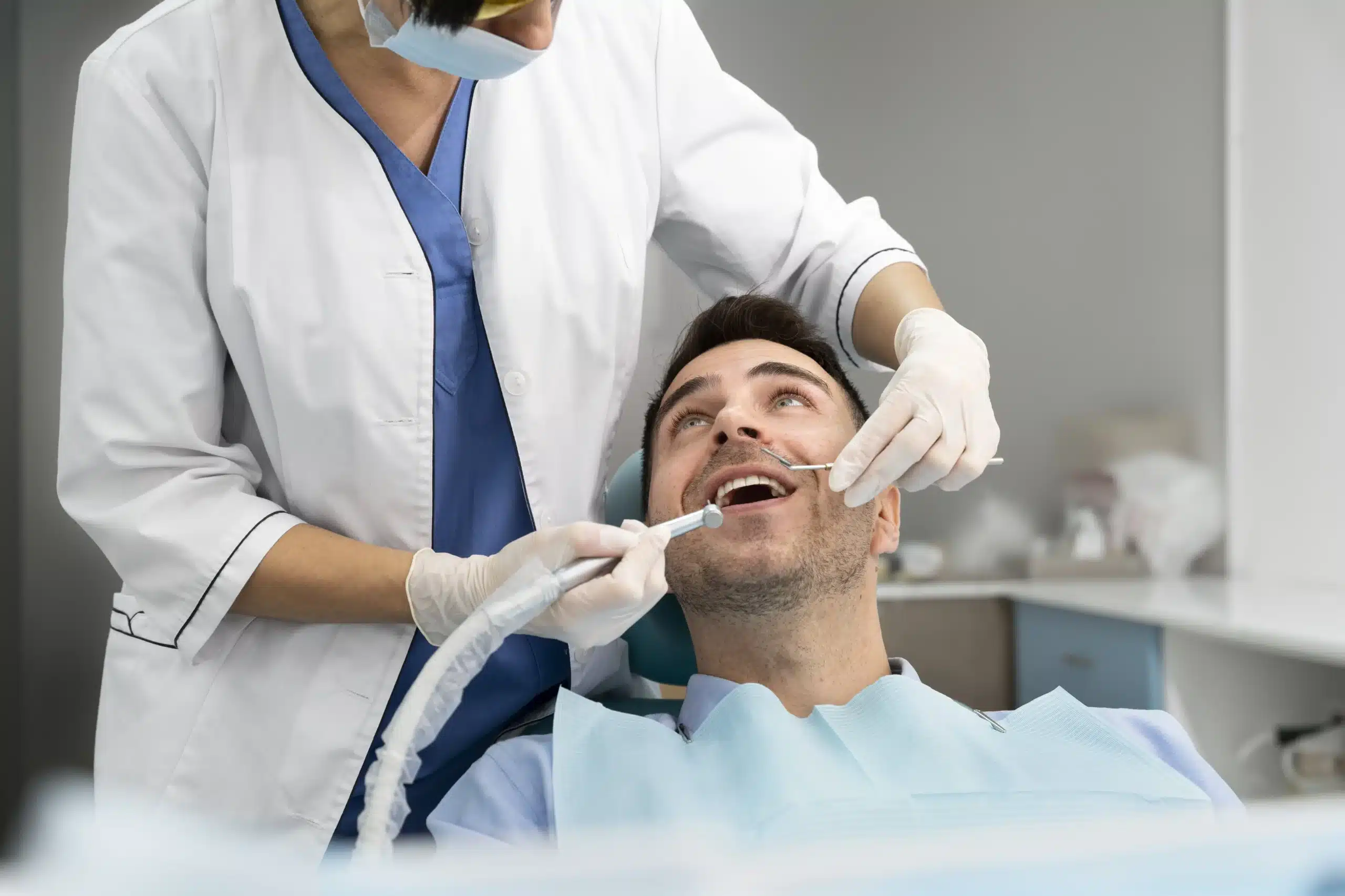

Cracked tooth symptoms can include sharp pain when biting, pain when releasing your bite, sensitivity to hot or cold foods, and discomfort that comes and goes. Some cracks are too small to see, while deeper cracks can affect the nerve and lead to infection.
A cracked tooth cannot heal itself. If you notice recurring pain in the same tooth, arrange a dental examination as soon as possible. Early assessment may help prevent the crack from worsening.
Quick Answer: What Are the Main Symptoms of a Cracked Tooth?
The most common cracked tooth symptoms include:
- Sharp pain when biting or chewing
- Pain when releasing your bite
- Sensitivity to hot or cold foods and drinks
- Pain that comes and goes
- Discomfort when eating hard or sticky foods
- A rough or sharp edge on the tooth
- Swelling or gum tenderness if infection develops
- Pain when chewing on one particular side of the mouth
A cracked tooth may not always be visible. These symptoms can also occur with tooth decay, damaged fillings, gum problems or dental infections, so a dentist must examine the tooth to confirm the cause.
What Is a Cracked Tooth?
A cracked tooth is a tooth that has developed a fracture in its structure. The crack may affect the outer enamel, extend into the deeper layers of the tooth or travel towards the root.
Some cracks are minor and remain limited to the enamel. Others can extend towards the nerve or below the gumline, making the tooth more difficult to treat.
A cracked tooth may become worse over time because normal biting and chewing place pressure on the damaged area.
What Does a Cracked Tooth Feel Like?
A cracked tooth can feel different depending on the location and depth of the crack.
You may notice:
- A sudden sharp pain when biting down
- Pain when releasing your bite
- Sensitivity to hot or cold foods
- A dull ache that comes and goes
- Pain when chewing on hard foods
- Discomfort that is difficult to locate
- A feeling that one tooth is higher or different from the others
- Pain that appears without an obvious reason
Some people can identify the exact tooth causing the pain. In other cases, the pain may feel like it is coming from several teeth.
Cracked Tooth Symptoms to Watch For
1. Sharp Pain When Biting or Chewing
Sharp pain when biting is one of the most common signs of a cracked tooth.
You may notice pain when eating:
- Nuts
- Hard lollies
- Crusty bread
- Meat
- Ice
- Popcorn kernels
- Chewy foods
The pain may happen when you bite down or when you release your bite. This can occur when the cracked parts of the tooth move slightly under pressure.
2. Pain When Releasing Your Bite
Some people feel pain when they stop biting rather than when they first apply pressure.
This may happen because the cracked sections of the tooth flex under pressure. However, pain when releasing your bite can also occur with other dental conditions.
If the same tooth repeatedly hurts when you bite or release your bite, arrange a dental examination.
3. Sensitivity to Hot or Cold
A cracked tooth may become sensitive to:
- Hot tea or coffee
- Cold water
- Ice cream
- Cold drinks
- Hot meals
- Sweet foods
Sensitivity may last for a few seconds or continue after the hot or cold food has been removed.
This can happen when a crack affects the dentine or irritates the nerve inside the tooth.
4. Pain That Comes and Goes
Cracked tooth pain is not always constant.
You may feel pain while eating and then feel normal again afterwards. The pain may return days later, especially when pressure is placed on the tooth.
Recurring pain should not be ignored simply because it disappears.
5. Pain When Eating Hard or Sticky Foods
Some people only notice symptoms when eating particular foods.
Hard and sticky foods can place pressure on a cracked tooth and cause discomfort. You may find yourself chewing on the opposite side of your mouth to avoid pain.
This is an important sign that the tooth should be checked.
6. A Rough or Sharp Tooth Edge
A crack or broken piece of tooth may create a rough edge that you can feel with your tongue.
You may notice:
- A sharp area on the tooth
- A small piece breaking away
- Food getting caught around the tooth
- Irritation to your tongue or cheek
Do not try to file, cut or repair the tooth yourself.
7. Swollen or Tender Gums
If a crack allows bacteria to enter the deeper part of the tooth, inflammation or infection may develop.
Possible signs include:
- Swelling near the affected tooth
- Tender gums
- A small bump or pimple on the gum
- Bad taste in the mouth
- Persistent toothache
- Facial swelling
Swelling can indicate an infection and requires prompt dental care.
8. No Obvious Symptoms
Not every cracked tooth causes pain.
Some cracks are discovered during a routine dental examination. A dentist may notice a damaged filling, unusual line or weakened tooth structure before symptoms become obvious.
The absence of pain does not always mean the tooth is healthy.
Why Does a Cracked Tooth Hurt When I Bite?
A cracked tooth may hurt when biting because pressure causes the cracked sections of the tooth to move slightly. This movement can irritate the tissues inside the tooth and create sharp pain.
You may experience pain:
- When biting down
- When releasing your bite
- When chewing on one side
- When eating hard or chewy foods
However, tooth pain when biting can also be caused by:
- Tooth decay
- A loose or damaged filling
- A dental abscess
- A high dental crown or filling
- Inflammation around the tooth
- A cracked or damaged root
A dental examination is needed to identify the actual cause.
What Causes a Cracked Tooth?
Several factors can increase the risk of a cracked tooth.
Biting Hard Foods
Biting down on hard foods or objects can place excessive pressure on a tooth.
Examples include:
- Ice
- Hard lollies
- Popcorn kernels
- Nuts
- Fruit stones
- Bones
- Pens or other non-food objects
Teeth Grinding or Clenching
Teeth grinding and clenching can place repeated pressure on the teeth, particularly during sleep.
Over time, this may contribute to:
- Small cracks
- Worn enamel
- Broken fillings
- Tooth sensitivity
- Jaw discomfort
If grinding is contributing to tooth damage, your dentist may recommend a custom night guard.
Large or Older Fillings
A large filling can sometimes leave less natural tooth structure available to support the tooth.
This may make the tooth more vulnerable to cracking, particularly when combined with heavy biting pressure or teeth grinding.
An older filling does not automatically mean a tooth will crack. Your dentist can assess whether the restoration or tooth structure needs attention.
Previous Root Canal Treatment
Teeth that have undergone root canal treatment may be more vulnerable to fracture if they have lost a significant amount of tooth structure.
A dental crown may be recommended in some cases to help protect a weakened tooth.
Dental Injury or Trauma
A fall, sporting injury, accident or blow to the mouth can cause a tooth to crack.
Arrange a dental examination after an injury, even if the damage does not appear serious.
Age and General Tooth Wear
Teeth experience years of chewing pressure and general wear. This can increase the risk of cracks over time.
However, cracked teeth can occur at any age, particularly after an injury or when biting something hard.
Types of Tooth Cracks
Craze Lines
Craze lines are very small cracks in the outer enamel.
They are common in adults and are usually:
- Superficial
- Painless
- Limited to the enamel
- Discovered during a routine dental examination
Craze lines usually do not require treatment, but your dentist should confirm that the crack is only superficial.
Fractured Cusp
A fractured cusp affects one of the raised points on the chewing surface of a tooth, usually a back tooth.
It may occur around a large filling and can cause pain when chewing.
Depending on the damage, the tooth may be repaired with a filling or protected with a dental crown.
Cracked Tooth
A cracked tooth usually refers to a crack that begins on the chewing surface and extends towards the root.
The crack may remain above the gumline or extend below it. Treatment depends on whether the nerve and root are affected.
Split Tooth
A split tooth occurs when a crack progresses and separates the tooth into two or more sections.
A split tooth is more serious and may not be able to be saved as a complete tooth. Your dentist will assess whether any part of the tooth can be preserved.
Vertical Root Fracture
A vertical root fracture begins in the root and may extend towards the crown.
These fractures can be difficult to detect and may sometimes occur in teeth that have previously had root canal treatment.
Treatment may involve removing the affected tooth or, in selected cases, treating only the affected root.
How Is a Cracked Tooth Diagnosed?
Diagnosing a cracked tooth can be difficult because cracks are not always visible.
Your dentist may:
- Ask when the pain occurs.
- Examine the tooth and surrounding gums.
- Check your bite.
- Use a dental light or magnification.
- Perform a bite test on individual teeth.
- Check for hot or cold sensitivity.
- Take dental X-rays.
- Recommend further imaging if necessary.
Can a Cracked Tooth Be Seen on an X-ray?
Not every crack appears on a standard dental X-ray.
Some cracks are too narrow or positioned in a way that makes them difficult to see. However, an X-ray may help identify other problems, such as:
- Tooth decay
- Bone changes
- Infection around the root
- Damage to surrounding structures
Your dentist will consider your symptoms, examination findings and imaging together.
Cracked Tooth Treatment Options
Treatment depends on:
- The location of the crack
- The depth of the crack
- Whether the tooth is split
- Whether the nerve is affected
- Whether infection is present
- How much healthy tooth structure remains
- Whether the tooth can be restored
Dental Bonding or Filling
A small chip or minor fracture may sometimes be repaired with tooth-coloured bonding or a filling.
This may be suitable when:
- The damage is limited
- The tooth remains structurally strong
- The nerve is not affected
- Enough healthy tooth structure remains
Not every cracked tooth can be repaired with a filling. A deeper crack may require stronger protection.
Dental Crown
A dental crown covers the tooth and helps protect it from further damage during chewing.
A crown may be recommended when:
- A back tooth has a fractured cusp
- The tooth has a large filling
- The tooth has lost significant structure
- The crack has not split the tooth completely
- The tooth needs additional protection after root canal treatment
Your dentist will assess whether enough healthy tooth structure remains to support a crown.
Root Canal Treatment
If the crack reaches the pulp or nerve of the tooth, root canal treatment may be required.
Root canal treatment removes inflamed or infected tissue from inside the tooth. The tooth is then cleaned, sealed and restored.
Possible signs of nerve involvement include:
- Ongoing toothache
- Strong sensitivity to hot or cold
- Pain that continues after temperature exposure
- Pain that occurs without chewing
- Swelling or signs of infection
A dental crown may also be recommended after root canal treatment, depending on the condition of the tooth.
Tooth Extraction
If the crack extends too deeply into the root or the tooth has split into separate sections, it may not be possible to save it.
In this situation, your dentist may recommend extraction.
After extraction, replacement options may include:
- Dental implants
- Dental bridges
- Dentures
Your dentist can explain which option is suitable based on your oral health, bone support, budget and long-term needs.
Can a Cracked Tooth Be Saved?
Sometimes, but it depends on the depth and location of the crack.
A tooth may be treatable when:
- The crack has not split the tooth completely.
- Enough healthy tooth structure remains.
- The root is not severely fractured.
- The tooth can be restored securely.
- Any infection can be treated.
A deeper crack that extends below the gumline or separates the tooth into sections may not be repairable.
Your dentist will assess whether the tooth can be saved and explain the available treatment options.
Can a Cracked Tooth Heal on Its Own?
No. A cracked tooth cannot heal itself like a broken bone.
The crack may remain stable for a period of time, but it can also spread when the tooth is exposed to chewing pressure.
A crack that reaches the nerve may lead to:
- Inflammation
- Infection
- Increased pain
- Further tooth breakage
- Tooth loss
Early assessment gives your dentist a better opportunity to protect the tooth.
What Should You Do If You Think You Have a Cracked Tooth?
While waiting for your dental appointment:
- Avoid chewing on the affected side.
- Choose softer foods.
- Avoid ice, hard lollies and hard foods.
- Avoid very hot or cold foods if they trigger pain.
- Brush gently and keep the area clean.
- Use a cold compress if there is swelling.
- Take suitable pain relief only as directed on the label or by a healthcare professional.
- Do not place aspirin directly on the tooth or gum.
- Do not attempt to glue, file or repair the tooth yourself.
If a piece of tooth has broken off, keep it in milk or sterile saline and take it to your dentist if possible.
When Is a Cracked Tooth a Dental Emergency?
Arrange an urgent dental appointment if you have:
- Severe or persistent tooth pain
- Pain that prevents you from eating or sleeping
- A visibly broken or cracked tooth
- Swelling around the tooth or face
- Fever or signs of infection
- A loose tooth after an injury
- A crack following a sporting injury or accident
Seek emergency medical care if significant facial or mouth swelling affects breathing or swallowing.
Cracked Tooth vs Chipped Tooth: What Is the Difference?
A chipped tooth usually involves a small piece breaking away from the enamel or tooth structure.
A cracked tooth involves a fracture line that may extend through the tooth. A crack can be more difficult to detect and may cause pain when biting or chewing.
Both conditions should be assessed by a dentist because a small chip and a deeper crack may require different treatments.
Cracked Tooth vs Tooth Decay: How Can You Tell the Difference?
Cracked teeth and tooth decay can cause similar symptoms, including pain, sensitivity and discomfort when eating.
| Symptom | Possible cause |
|---|---|
| Pain when biting or releasing your bite | Cracked tooth or damaged restoration |
| Sensitivity to hot and cold | Crack, decay or nerve irritation |
| Pain from sweet foods | Tooth decay or exposed dentine |
| Rough or broken tooth edge | Crack, chip or broken filling |
| Persistent toothache | Nerve inflammation or infection |
| Swollen gum | Possible dental infection |
These symptoms are not exclusive to one condition. A dentist must examine the tooth before confirming the diagnosis.
Book a Dental Examination at Parkmore Family Dental
If you are experiencing cracked tooth symptoms, pain when biting, sensitivity or a broken tooth, the team at Parkmore Family Dental can assess the affected tooth and explain your treatment options.
Early diagnosis may help protect the tooth and reduce the risk of further damage.
Contact Parkmore Family Dental in Keysborough to arrange a dental examination.
Medically reviewed by the Parkmore Family Dental team. This article provides general information only and does not replace an examination by a qualified dentist.