Thinking about dental implants usually starts with a handful of questions. Will they work for me? What if I have lost bone, or I smoke, or I have diabetes? What actually happens at the first appointment?
If any of these sound familiar, you are in good company. “Am I suitable for dental implants?” is one of the most common questions we hear. The honest answer depends on your gums, jawbone, health and habits, which is why every implant journey with us starts with a consultation. This guide explains what we check, so you can walk in feeling informed.
Quick answer: You may be a good candidate for dental implants if you are an adult with healthy gums, enough jawbone and good general health. Bone loss, gum disease, smoking or diabetes do not always rule you out, but they may need attention first. In-person consultation with X-rays is the only way to know for sure.
What Makes Someone a Good Candidate for Dental Implants?
An implant works as an artificial tooth root: a small titanium post set in the jaw to hold a crown, bridge or denture. Over the following months, the bone gradually bonds to the post in a process called osseointegration. For this to go well, we generally look for:
- A jaw that has finished growing
- Enough healthy bone to hold the post firmly
- Healthy gums with no active gum disease
- General health that supports good healing
- A good daily brushing and flossing routine
If one of these is missing right now, it does not necessarily mean a “no”. It often just means a few steps come first.
What We Check at Your Dental Implant Consultation

Your consultation is an unhurried appointment with no pressure to commit. We look at seven key areas.
1. Your Medical History and Medications
We start with a conversation. We will ask about your health conditions, past surgeries and any medicines you take, including blood thinners and bone medications such as bisphosphonates, which can affect how bone heals. We also need to know about any past radiation treatment to the head or neck.
Can You Get Dental Implants If You Have Diabetes?
In many cases, yes. Well-managed diabetes is not usually a barrier, but poorly controlled blood sugar can slow healing and raise infection risk, so we may ask your GP for information before planning treatment.
2. Your Gum Health
We look for redness, swelling and bleeding, and gently measure the spaces between your gums and teeth. Deeper spaces, called pockets, can signal gum disease, which can damage bone around an implant just as it does around natural teeth.
Can You Get Implants If You Have Gum Disease?
Often, yes, once it is treated and stable. We start with a deep clean below the gumline and review your gums before planning surgery.
3. Your Jawbone
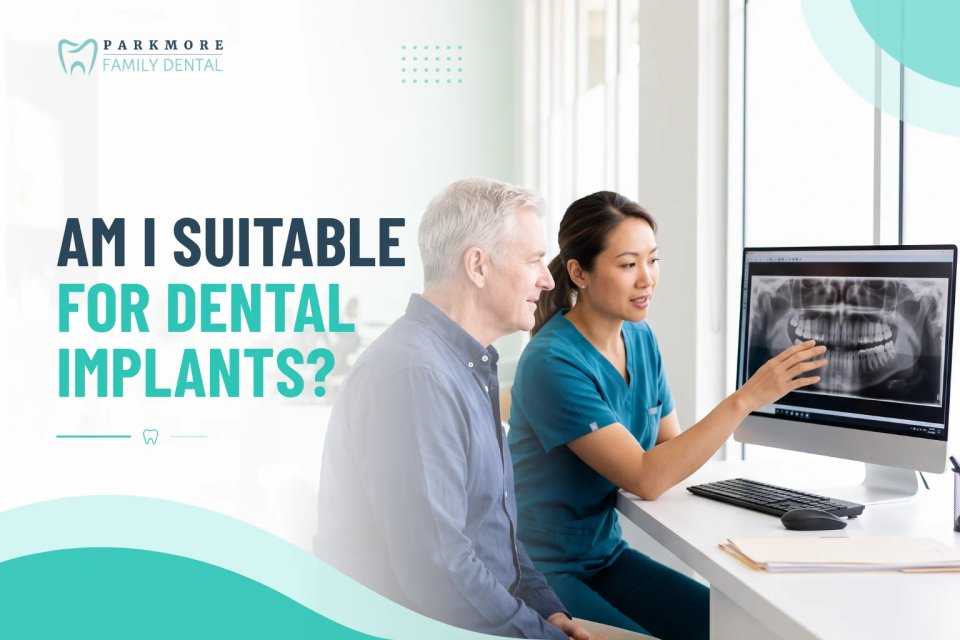
Implants need solid bone to anchor them securely. We take X-rays and, where needed, a 3D scan to measure the bone at the gap and locate nearby nerves and sinuses, so we can plan the implant’s position carefully.
How Do You Know If You Have Enough Bone for Dental Implants?

Only imaging can tell you. After a tooth is lost, the bone beneath it slowly shrinks, so people who have had a gap for many years sometimes have less to work with. That does not automatically rule you out. Procedures such as bone grafting or a sinus lift in the upper back jaw may help rebuild support, although they add time to treatment and carry their own risks.
4. Your Remaining Teeth and Bite
We check neighbouring teeth for decay or wear, look at how your upper and lower teeth meet, and ask whether you grind or clench at night. Grinding places extra force on implants, so a night guard may become part of your plan.
5. Your Lifestyle Habits

We ask, without judgement, about smoking, alcohol consumption and your cleaning routine. Implants cannot decay, but the gums and bone around them still need daily care.
Can You Get Dental Implants If You Smoke?
Smoking does not automatically exclude you, but it reduces blood flow to the gums and is linked with slower healing and a higher risk of implant complications. If you smoke, we will talk openly about these risks and encourage you to cut down or stop before and after surgery.
6. Your Age and Jaw Development
Implants need a jaw that has finished growing; otherwise, they can end up out of line as the face develops. Younger patients usually need to wait until their jaw is fully developed, often by the late teens or early twenties.
Are You Too Old for Dental Implants?
No, there is no upper age limit. Your general health and bone quality matter far more than your age.
7. Your Goals and Expectations
Replacing one front tooth is a very different conversation from replacing a full arch. We will talk about what you hope to achieve, the number of visits involved, the expected timeframe, the costs and the alternatives, so you can make a decision that feels right for you.
What If You Are Not Suitable for Dental Implants?
A “not yet” rarely closes the door on implants for good. Sometimes it simply means a few steps come first, such as gum treatment, a bone graft or better blood sugar control. If implants are still not the right fit, bridges and dentures remain effective ways to replace missing teeth, and we will explain the benefits and limitations of each.
How to Prepare for Your Consultation
To get the most from your visit, try to bring:
- A list of your medications and any health conditions
- Previous dental X-rays or records, if you have them
- Your questions, such as what influenced our assessment, what the risks are, what alternatives exist and what the total cost may be
Find Out Where You Stand at Parkmore Family Dental
If you have been asking yourself “am I suitable for dental implants?”, the most reliable answer comes from a thorough examination. At Parkmore Family Dental in Keysborough, our team takes the time to assess your mouth, explain what we find in plain language and talk you through every option, including those that do not involve implants.
Ready to find out more? Contact us or book your appointment online. You can also call us on (03) 8592 0298 or visit us at 116 Kingsclere Avenue, Keysborough. We are here to help with every part of your dental care.